Coordinated Care Wherever the Patient Calls Home
Hospitals Without Walls™ is building an integrated healthcare delivery model that connects patients, families, clinicians, healthcare organizations, health plans, and community resources across traditional healthcare boundaries.
Our mission is to bring appropriately selected healthcare services closer to the patient through coordinated home based care, mobile health delivery, telehealth, transitional care, chronic disease management, palliative support, and technology enabled monitoring.

A More Connected Model of Care
Healthcare is often divided among hospitals, physicians, specialists, home health agencies, pharmacies, laboratories, rehabilitation providers, caregivers, and insurance organizations. Patients particularly older adults and people living with multiple chronic conditions may be left to navigate these separate parts of the healthcare system with limited coordination.
Hospitals Without Walls™ is designed to help connect those parts.
We bring healthcare professionals, organizations, information, technology, and support services together around the needs, goals, preferences, and circumstances of each patient.
Our objective is straightforward:
Deliver the right care, through the right qualified professionals, in the right setting, at the right time.
Extending Coordinated Healthcare Beyond Traditional Walls
Depending on the patient’s needs, clinical eligibility, geographic availability, applicable law, payer authorization, and the services offered by participating providers, the Hospitals Without Walls™ model may incorporate
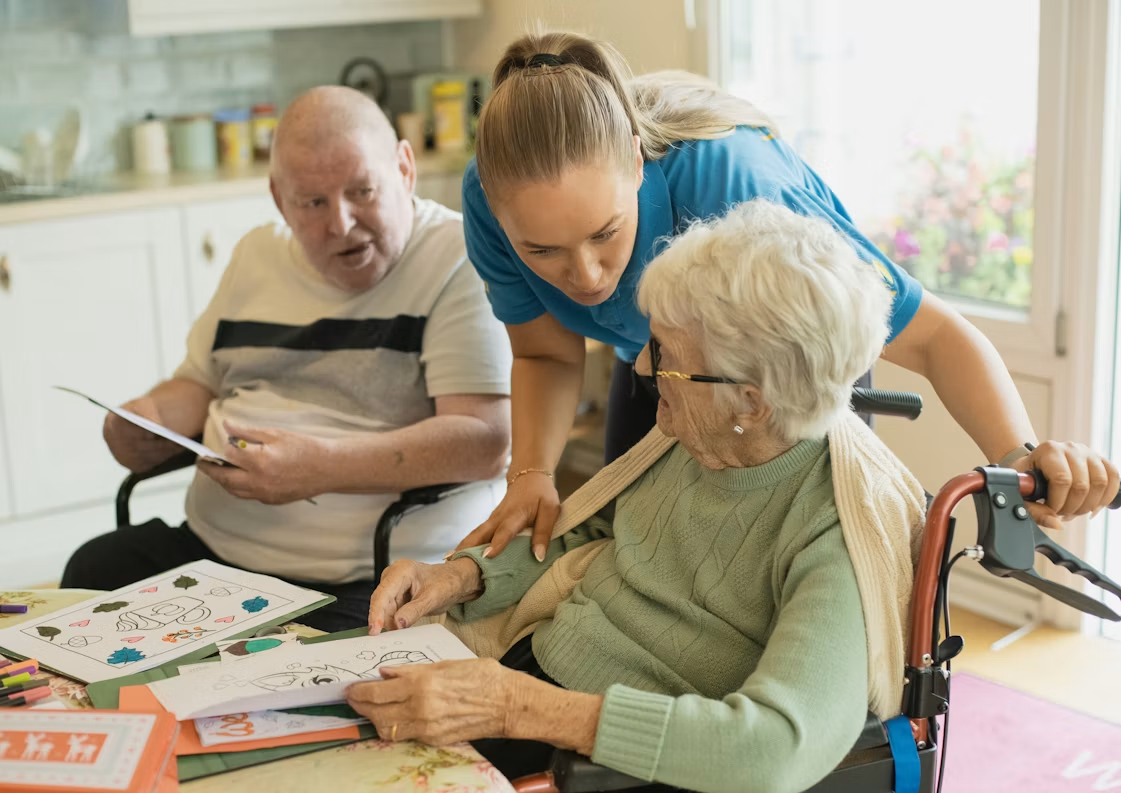
Comprehensive Geriatric Care
Multidimensional assessment and care planning for older adults, including medical, functional, cognitive, emotional, social, environmental, and caregiver related need
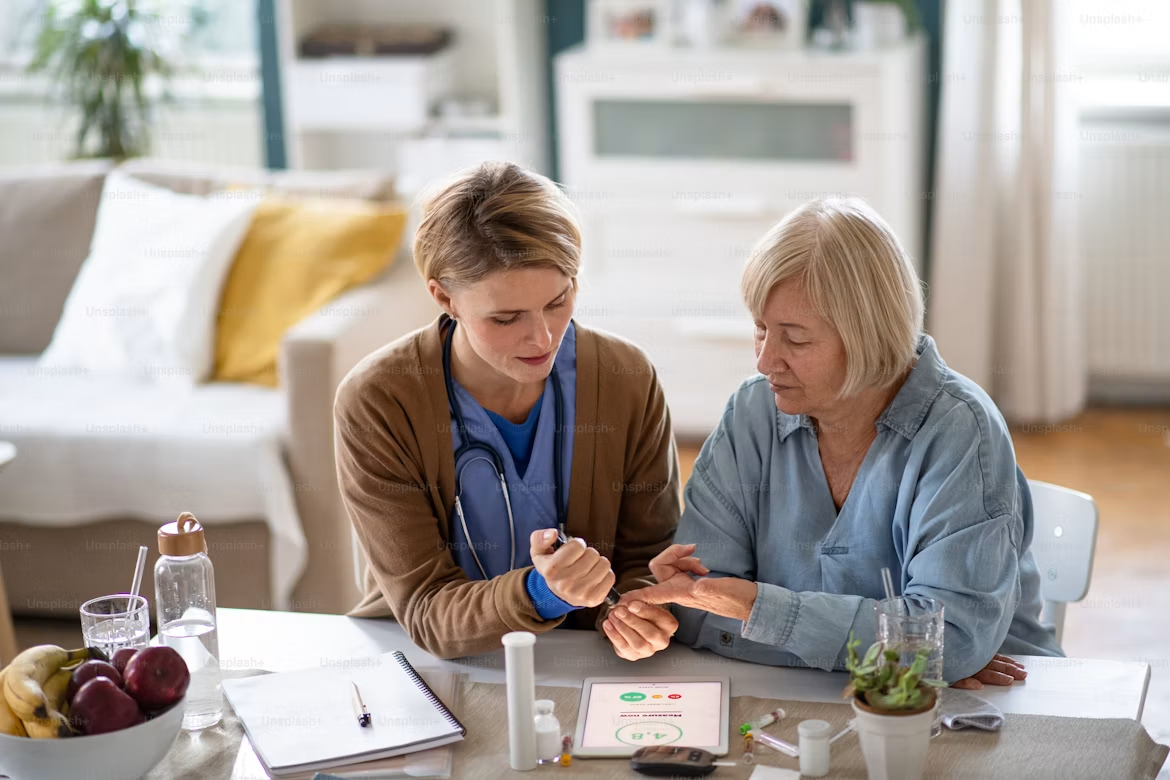
Chronic Disease Management
Longitudinal support for patients living with conditions such as heart disease, diabetes, chronic pulmonary disease, kidney disease, dementia, mobility limitations, and other complex illnesses

Palliative Medicine and Supportive Care
Relief of symptoms, stress, and suffering for patients living with serious illness provided alongside appropriate disease-directed treatment when clinically indicate

Transitional Care
Structured support during transitions between hospitals, rehabilitation facilities, skilled nursing facilities, physician practices, home health services, and the patient’s residence

Mobile Health Delivery
Appropriately authorized healthcare professionals and services delivered in the patient’s home, residential setting, or other permitted community location.

Telehealth and Virtual Care
Technology-enabled clinical communication, follow up, education, and care coordination when appropriate and legally permitted.

Remote Patient Monitoring
Collection and review of selected health information outside conventional clinical settings when ordered, clinically appropriate, operationally available, and supported by applicable payer requirements.

Care Coordination
Deliberate organization of care activities and communication among the patient, family, caregivers, clinicians, facilities, health plans, and community resources.
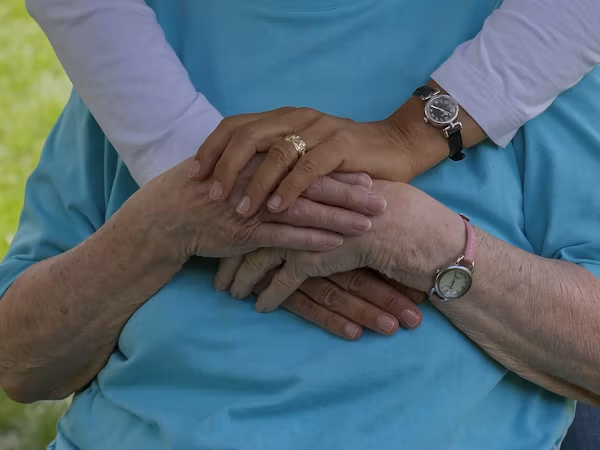
Caregiver and Family Support
Education, communication, resource navigation, and care planning support for the individuals who help patients remain safe and supported.

Hospitalization and Readmission Prevention
Early identification and management of clinical, functional, medication related, environmental, and social risks that may contribute to avoidable deterioration or unnecessary healthcare utilization
WHO WE SERVE
Designed for Patients and for the Organizations Responsible for Their Care
Hospitals Without Walls™ develops collaborative solutions for

Assisted living and senior communities

Physician groups and medical practices

Home health and community healthcare organizations

Hospitals and health systems

Health plans and insurance organizations

Government agencies

Military and veterans healthcare organizations

Employers and commercial organizations

Skilled nursing and post acute facilities

Patients, families, and caregivers
Hospitals Without Walls’ philosophy of global, patient centered healthcare delivery was developed by our founder,
Professor Dr. Daniel Shane Sheibani Davidson an advocate for patient centered healthcare, human dignity, tolerance, and peace.
This philosophy is grounded in EntireoPathic Medicine™, the whole person framework he developed in 1996. His background includes many years of medical and surgical practice and an Executive MBA from the University of California, Irvine, with a focus on healthcare administration.
Drawing on decades of experience in clinical practice and healthcare administration, Davidson now focuses on healthcare administration, leadership education, and the development of healthcare delivery systems. He does not practice medicine or provide patient specific medical advice, diagnosis, or treatment at this time..
WHY WE SAVE MONEY
Better Use of Healthcare Resources
Preventable complications, fragmented care, poorly managed transitions, medication discrepancies, delayed intervention, and unnecessary duplication can increase healthcare utilization and cost.
Hospitals Without Walls™ is designed to help participating organizations address these risks through coordinated, appropriately delivered care across the healthcare continuum.
Potential sources of value may include:
Actual clinical and financial results depend on the population served, program design, service intensity, participant engagement, contractual structure, local resources, and implementation quality. Any projected savings should therefore be established through population-specific analysis and measured against mutually agreed performance indicators.
Learn Why We Save MoneyWHY OUR MODEL MATTERS
Better Coordination Can Support Safer, More Effective Care
The Agency for Healthcare Research and Quality identifies care coordination as a strategy for organizing patient care activities and sharing relevant information among the people involved in a patient's care. Its purpose is to help make care safer, more appropriate, and more effective.
Hospitals Without Walls™ applies that principle across settings by emphasizing:
Note: No healthcare program can guarantee that every hospitalization, emergency department visit, complication, or readmission will be prevented. Our objective is to identify and address preventable risks while helping patients receive appropriate care promptly including emergency or hospital care whenever it is medically necessary.
360° WIN MODEL
Value for Every Responsible Participant
Sustainable healthcare transformation should create measurable value throughout the care system.

Patients
More connected, convenient, individualized, and supportive care.

Families and Caregivers
Clearer communication, education, guidance, and access to appropriate resources

Clinicians
Better information, stronger coordination, and greater continuity across care settings.

Hospitals and Facilities
Support for safer transitions, continuity after discharge, and appropriate utilization.

Health Plans and Purchasers
Opportunities to improve care management, member experience, and responsible resource utilization.

Healthcare Partners
A collaborative structure designed to align services, responsibilities, quality, and accountability.

Communities
Improved connection between healthcare delivery and the local resources patients rely upon.
Let Us Build the Right Model for Your Organization
Hospitals Without Walls™ works with healthcare and institutional partners to develop programs based on the needs of the population being served.
Potential contracting relationships include:
Every proposed engagement is evaluated individually. Program scope, clinical responsibilities, performance measures, reporting requirements, financial terms, compliance requirements, and implementation timelines must be defined in a written agreement.
QUALITY AND ETHICS
Patient Welfare Comes First
Hospitals Without Walls™ is committed to:
We do not support the withholding of medically necessary care for the purpose of reducing cost.
Healthcare Should Follow the Patient’s Needs not Be Limited by Physical Walls.
Let us explore how Hospitals Without Walls™ can support your patients, members, organization, workforce, or community.
EVIDENCE STATEMENT
Hospitals Without Walls™ is committed to presenting material clinical, scientific, operational, financial, and quantitative claims accurately and responsibly. Where specific outcomes or savings are reported, they should be supported by identifiable data, appropriate methodology, and credible sources. Results observed in one population or program should not be assumed to apply universally.
IMPORTANT NOTICE
Hospitals Without Walls™ is an organizational healthcare delivery and collaboration model. The name does not, by itself, represent a Medicare certified hospital, guarantee inpatient level hospital care in the home, or indicate affiliation with or endorsement by the Centers for Medicare & Medicaid Services or any other government agency.
The availability of particular clinical services depends on the participating organization, the qualifications and licensure of the professionals involved, the patient’s location and clinical eligibility, payer authorization, and applicable federal and state law.
This website does not provide medical advice and does not replace evaluation by a qualified healthcare professional. If you believe you are experiencing a medical emergency, call 911 or seek emergency assistance immediately.